Back

Assay-me

Mobile Assistant for Healthcare

Mobile Development
UX/UI Design
DevOps
Mobile Assistant for Healthcare | Malevich Studio Potrfolio

The client

Assay-me

Industry - Healthcare
Location - United States of America
Mobile Assistant for Healthcare | Malevich Studio Potrfolio

Services

Android App
iOS App
Cross Platform App
UI/UX redesign
CI/CD - applied a set of measures that allow for faster and cheaper delivery of new features to production

Technology Stack

React Native - stack technology Malevich company
Typescript - stack technology Malevich company
Expo - stack technology Malevich company
Node.js - stack technology Malevich company
GraphQL - stack technology Malevich company
Bitbucket - stack technology Malevich company

The Challenge

01.
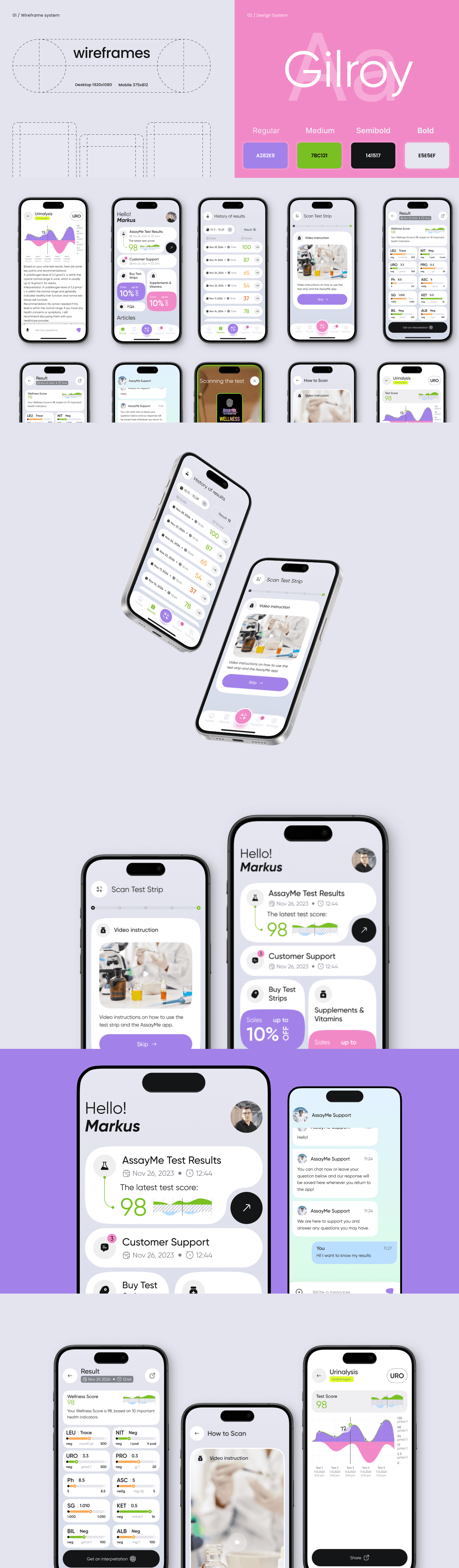
To create a polished, high-impact UX/UI experience for a dual-platform iOS and Android application, transforming raw sketches into a cohesive product vision. The goal was to deliver 40–45 thoughtfully crafted screens in both Light and Dark modes, ensuring a seamless and intuitive user journey. Alongside the design, the challenge included building a fully functional cross-platform mobile application using React Native, preparing stable testing builds, and setting the foundation for a smooth and reliable release on both platforms.
The SolutionThe Solution

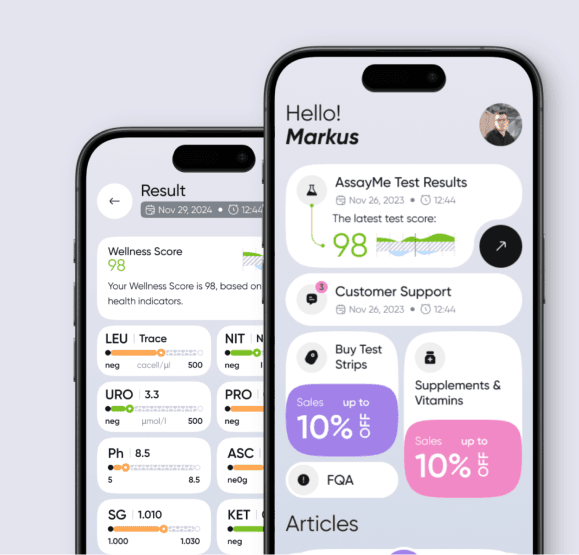
We streamlined the product vision by running a rapid UX audit, refining the information architecture, and shaping all core flows — onboarding, scanning, insights, history, profile & settings, and notifications. From there, we built two polished themes (Light/Dark) and a scalable design system that accelerated both design quality and development speed. Interactive prototypes and a clean developer hand-off ensured frictionless execution.

The app was then brought to life with a high-performance React Native implementation for iOS and Android. We delivered smooth navigation, reliable state management, theming, localization, backend integrations (REST/GraphQL), robust error handling, caching, analytics, deep links, and push notifications — all backed by unit tests and critical-path end-to-end scenarios. Final TestFlight and Android Internal Testing builds were prepared with release-ready documentation.


Technologies:

Figma

Used as the single source of truth for UX and UI — from user flows and wireframes to the final design system and interactive prototypes. This made reviews faster, reduced miscommunication with developers, and ensured pixel-perfect implementation across iOS and Android.

React Native

Enabled us to ship a single high-performance codebase for both iOS and Android. We reused most of the UI and business logic, which cut development time, simplified maintenance, and kept the experience consistent across platforms.

TypeScript

Provided strong typing for the React Native codebase, catching many issues at compile time instead of in production. It made refactoring safer, improved IDE autocompletion, and helped keep the app’s state and API contracts reliable as the project grew.

React Navigation

Powered the app’s navigation structure — stack and tab flows for onboarding, scanning, insights, history, profile, and settings. It gave us smooth transitions, deep-link support, and a flexible way to manage complex navigation logic.

Push Notifications

Used to re-engage users with timely reminders, insights, and status updates. Proper configuration of notification channels and payloads helped increase retention and ensured that critical events weren’t missed.

Node.js

Served as the runtime for the backend services that handled business logic, API endpoints, authentication, and communication with external systems. Its event-driven model allowed us to process requests efficiently and scale as traffic grows.

GraphQL

Provided a flexible API layer between the mobile app and backend, letting the client request exactly the data it needed in a single round trip. This reduced over-fetching/under-fetching, simplified versioning, and made it easier to evolve the API without breaking the app.

Bitbucket

Used as our central Git repository with pull requests, code reviews, and branch protection rules. It helped enforce code quality, supported CI/CD pipelines, and kept the entire team aligned on a clean, traceable delivery process.
Mobile Assistant for Healthcare | Malevich Studio Potrfolio

The Outcome

01.

End-to-end delivery

Complete UX/UI design and a fully functional React Native app with Light/Dark themes for iOS and Android.

02.

Production-ready builds

TestFlight and Android Internal Testing builds prepared with release-ready documentation.

03.

Fast time-to-market

A single shared codebase and automated CI/CD pipeline accelerated development and releases.

04.

Consistent cross-platform UX

Unified design system ensured a cohesive user experience across both platforms.

05.

Low-risk handoff

Clear specifications, design system, and DevOps setup enabled smooth handoff and predictable scaling.

06.

Scalable architecture

Project structured for easy feature expansion and long-term product growth.<